Collection: Svetlana (Tkački Kutak)

Pljevlja, once the industrial pride of Montenegro, now faces the departure of its young people and the extinction of its traditions; every hand that preserves them is more precious than ever. In this city, among the last guardians of an ancestral art—weaving—is Svetlana, a woman who weaves not only threads into her creations, but also emotions, memories, and love.
Read more...
The story of Svetlana and the sons who guard the soul of Pljevlja

This hardworking and persevering woman, strongly supported by her family, protects what is gradually disappearing: a know-how that, for generations, has nourished and warmed Montenegrin homes.
In the past, weaving was a symbol of a household's wealth. Today, as villages empty and crafts die out, these kinds of stories glow like embers on a dying hearth.
Svetlana opens up and tells us about those first moments:
“My story with weaving began in 2006. As a mother of three, I was thinking about what I could do to further enrich my life, to not just be a housewife. I have always loved unusual things, and weaving offers me endless possibilities. At first, it wasn't easy. I had my first experience with a woman who worked in the Dragačevo weavers' cooperative, and then I perfected my skills on my own. Even if my achievements are modest, the inner satisfaction gives me the impetus to go further,” says Svetlana.

Without the understanding and patience of her husband and family, she said, it would have been difficult to reconcile daily obligations with the long hours spent on the job.
For her, fairs and exhibitions are meeting places for the last artisans who continue to preserve the tradition.
“At fairs and exhibitions, you always find artisans who are fighting to keep old trades alive, people who produce healthy food and preserve the best of the past. These are wonderful encounters. My works have traveled all over the world: if I haven’t traveled, my works have. They are often bought as gifts for people abroad to remind them of their origins. Foreigners are more enthusiastic than Montenegrins!” says Svetlana.
Her first tool was an old loom from Dragačevo. The beginnings were trying, she says, but this difficulty opened a window onto the past, onto the lives of our great-grandmothers, grandmothers and mothers, who, despite the hardship, had the incredible strength to weave all night long what would feed and warm their families.
“I bought my first loom in Dragačevo. It was old, but it taught me everything. I thought about our grandmothers and great-grandmothers: how much they must have struggled. Today, it’s easier, even if everything is still done by hand, but it’s simpler. Yet, old women still ask me: what hardship drove you to weave? For them, it remains a memory of arduous work. I do it for pleasure. They had to work late into the night after all the housework,” Svetlana points out.
Weaving became her refuge, her peace, her silent prayer.

"The preparation itself is demanding, but when I sit down at the loom and start weaving, the thoughts flow, sometimes a song, often a prayer. It's a real pleasure. I love patterns, especially ethnic ones — they are my inexhaustible source of inspiration. While I'm creating one fabric, the idea for the next one is already coming," she says.
She points out that there are very few weavers left in Montenegro. The complete process that women used to carry out — from collecting the wool to dyeing, drying, carding, and weaving — has almost disappeared.
"In the old days, our women did everything: they dyed the wool with walnut leaves, boiled them, and then soaked the wool in them. Today, I buy everything ready-made. It doesn't exist anymore: no dyers, no carders. It would be impossible to do. And yet, our ancestors managed it,"
"You can't make a living from this job," she adds. "But it can supplement the family budget."
With a family that understands and supports her, she finds it easier to carry on. She hopes that one day, perhaps, her children will want to take up the trade: for it contains something that transcends economics — a legacy.
“It was difficult at first, but I didn’t give up. I wanted to be more than a housewife and have my own income. And when I think about what women went through a hundred years ago, I understand their strength. Many of our homes today are adorned with their works. It’s a trace that remains, proof that someone lived, worked, struggled, and created,” Svetlana concludes.

- Personal note -
And Marija, who is incredibly kind.
The creations
-

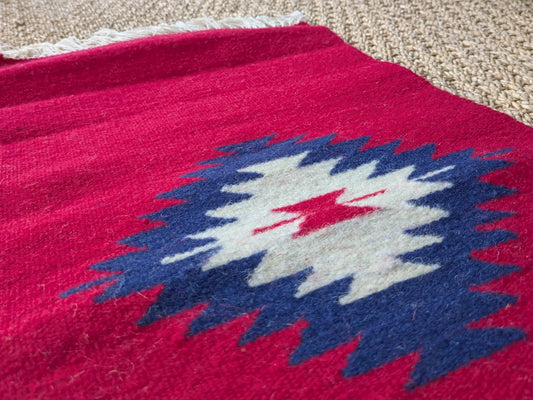 Sold out
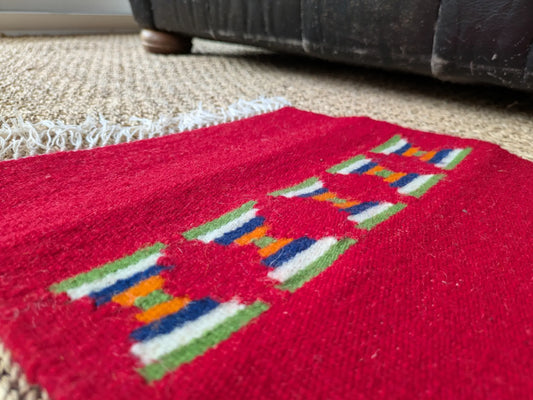
Hand-woven red Balkan kilim wool rug
Country of origin:Svetlana (Tkački Kutak)Regular price €38,00 EURRegular price -
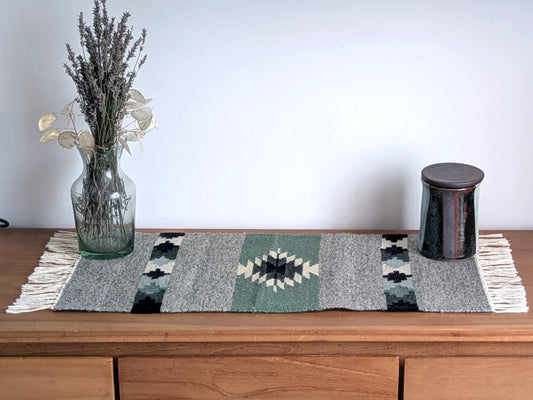
Handwoven grey and sage green wool kilim rug
Country of origin:Svetlana (Tkački Kutak)Regular price €38,00 EURRegular price -
Hand-woven off-white and grey wool kilim rug
Country of origin:Svetlana (Tkački Kutak)Regular price €34,20 EURRegular price€38,00 EURSale price €34,20 EURSale -
Grey and ecru Balkan kilim rug in wool
Country of origin:Svetlana (Tkački Kutak)Regular price €38,00 EURRegular price -
Red wool kilim rug woven in Montenegro
Country of origin:Svetlana (Tkački Kutak)Regular price €38,00 EURRegular price -
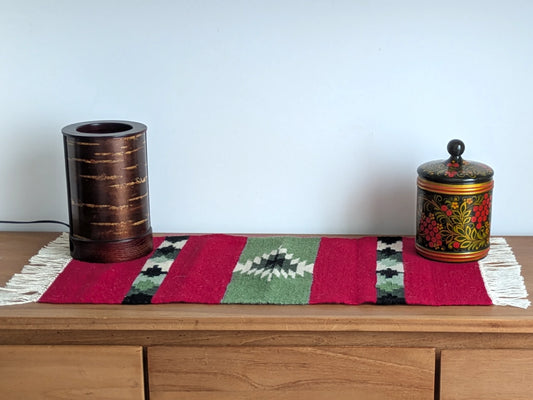
Red and green hand-woven Kilim rug from Montenegro
Country of origin:Svetlana (Tkački Kutak)Regular price €34,20 EURRegular price€38,00 EURSale price €34,20 EURSale -
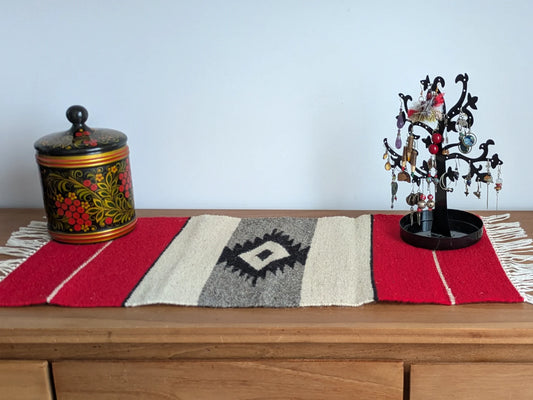
Montenegrin Kilim rug handwoven in red and grey wool
Country of origin:Svetlana (Tkački Kutak)Regular price €38,00 EURRegular price -
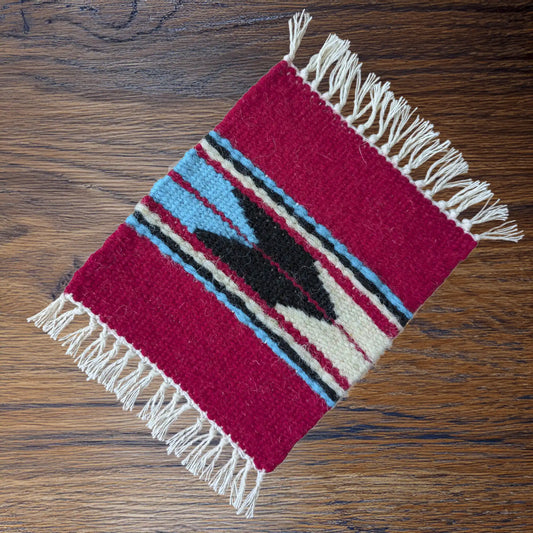
Mini wool kilim rug, Balkan design
Country of origin:Svetlana (Tkački Kutak)Regular price €6,00 EURRegular price -
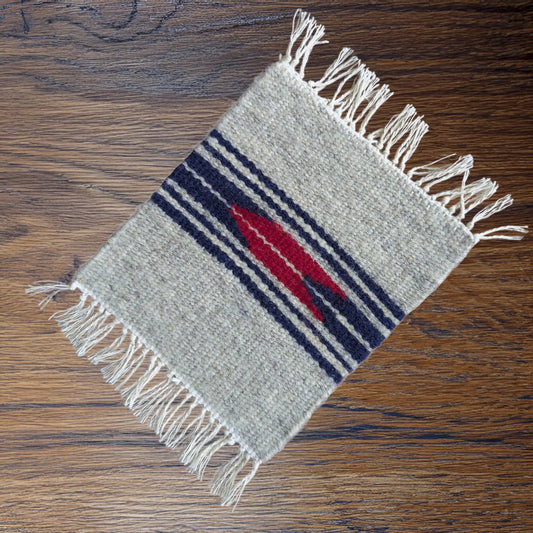
Hand-woven gray wool kilim rug
Country of origin:Svetlana (Tkački Kutak)Regular price €6,00 EURRegular price -
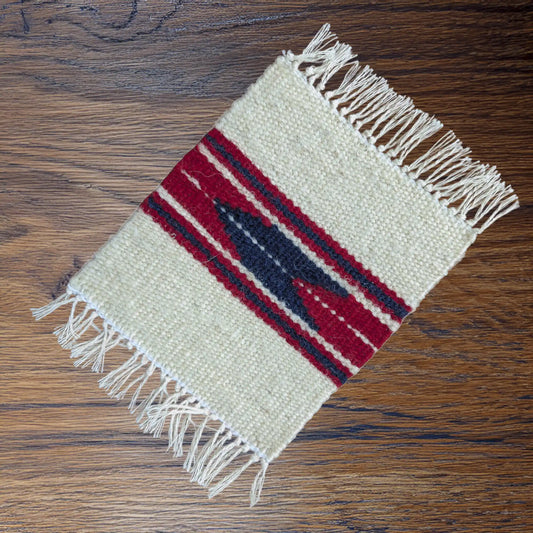
Mini kilim rug in ecru wool, with red stripe
Country of origin:Svetlana (Tkački Kutak)Regular price €6,00 EURRegular price -
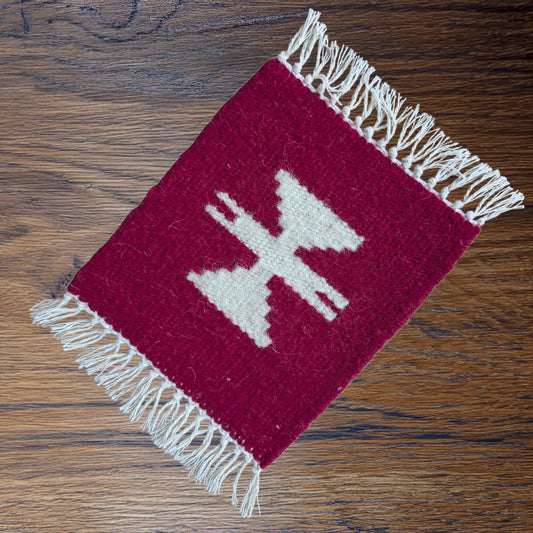
Small red wool kilim rug with white pattern
Country of origin:Svetlana (Tkački Kutak)Regular price €6,00 EURRegular price