Collection: Zlatno Runo Sirmijuma

Read more...
A women's collective dedicated to traditional felting in Sremska Mitrovica
The work of this collective is based on a completely manual approach, respectful of the fiber, using wool from western Serbia (local varieties such as pramenka, cigaja or other medium-fine wools suitable for slippers).
The collective carries on a still-living craft: slow, demanding, but creative and deeply linked to the cultural identity of Sremska Mitrovica.

A long and precise artisanal process: pustovanje and the 8 crossed layers
The felting technique practiced by the collective is based on two pillars:
- " pustovanje ", traditional wet felting (wool + hot water + soap)
- the layering of 8 thin layers of wool oriented in two directions to promote the interlacing of the fibers.
Soap plays a vital role in opening the microscopic scales of the fiber, which accelerates the felting process and makes the material more homogeneous. Lavender is added for its natural fragrance, mild antiseptic properties, and moth-repellent qualities. Each pair is shaped, rolled, pressed, and consolidated entirely by hand. The resulting felt is softer, denser, and more breathable than the mechanically compressed felts used in industry. The sole is reinforced with an eco-leather sole stitched with waxed shoemaking thread, ensuring grip and water resistance.
Making a pair of slippers takes approximately 10 hours, depending on the size and design.
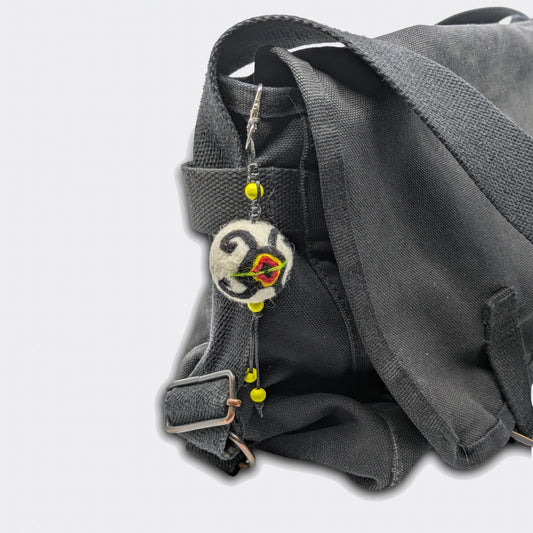
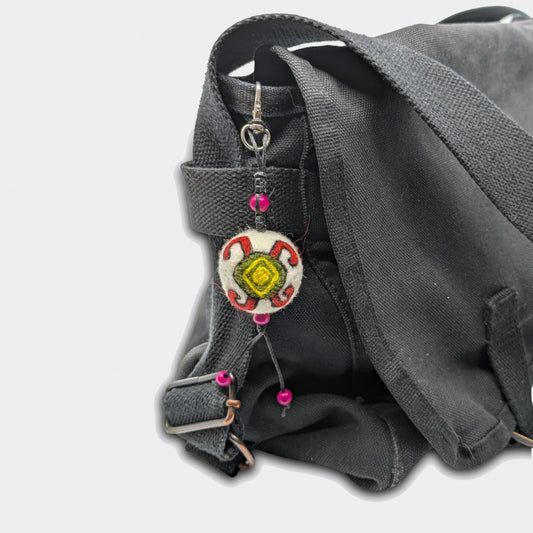
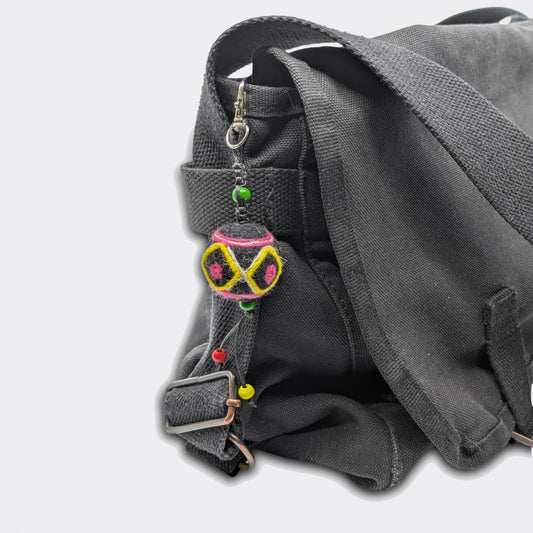
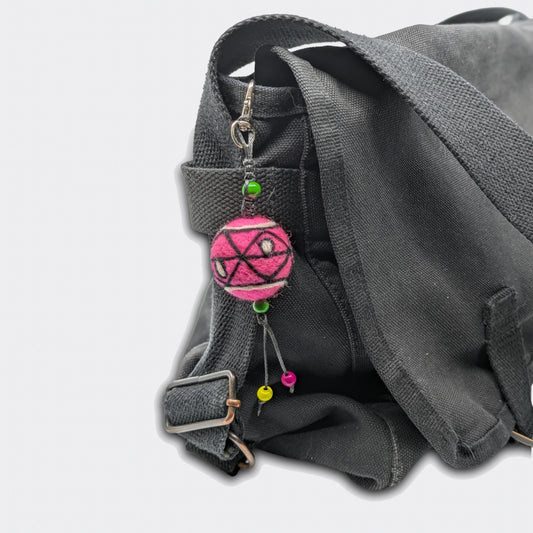
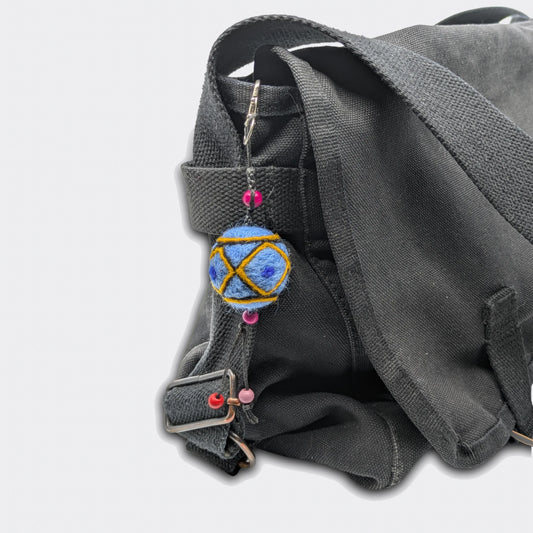
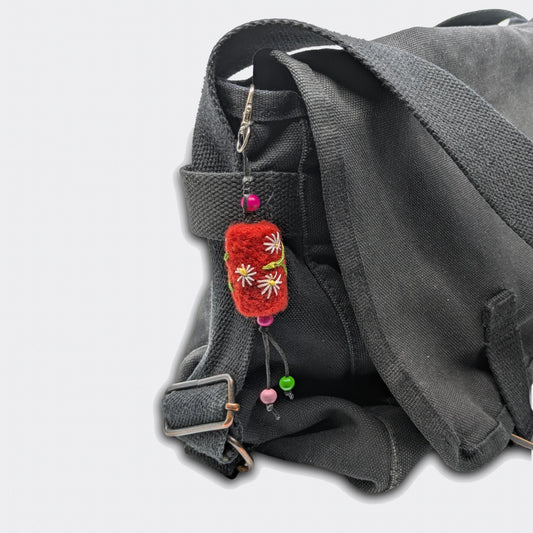
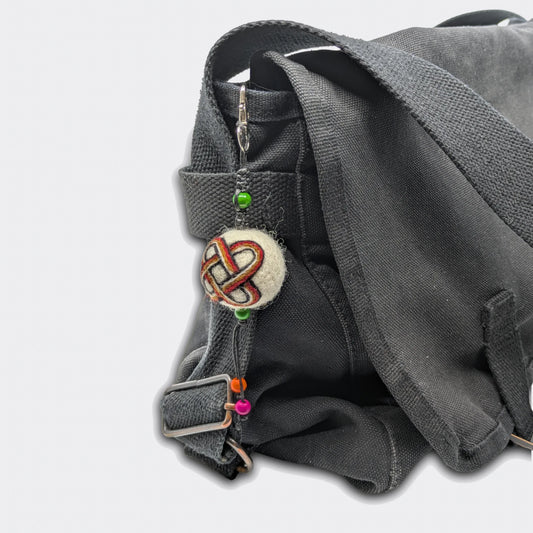
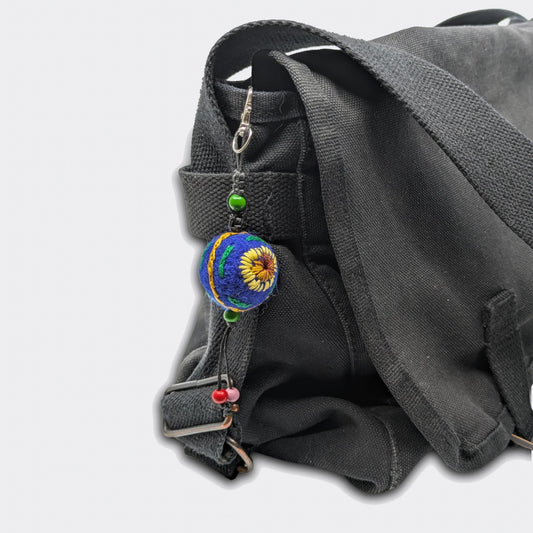
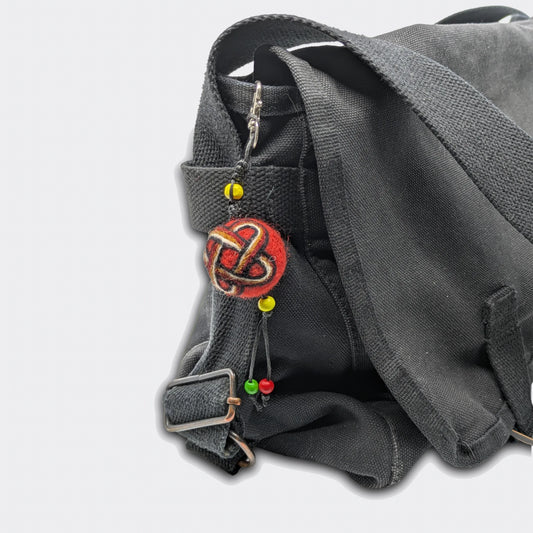
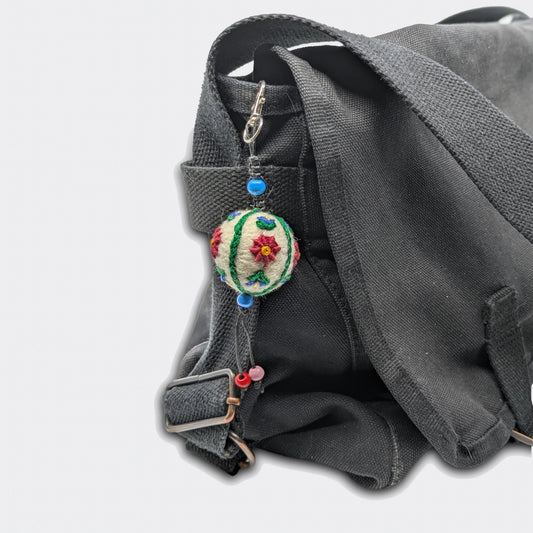
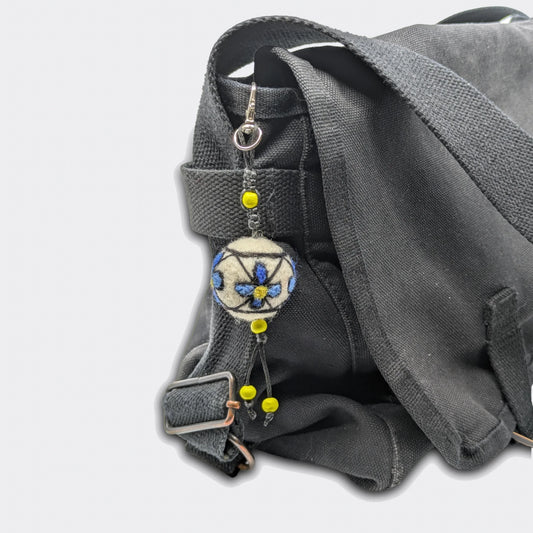
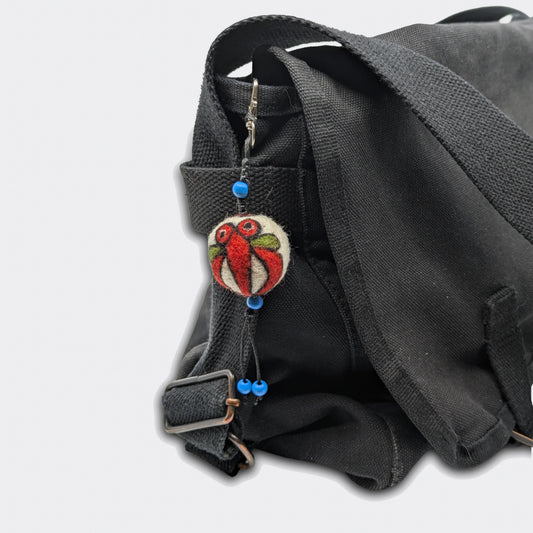
Alongside wet felting, the collective also practices so-called “dry felting,” a technique where the wool is compacted using a special needle. Through repeated, small pressures, the fibers bind together to form precise shapes and raised patterns. This more meticulous and sculptural process is how they create their small decorative pieces, such as bag charms.
Heritage of Sirmium: ancient motifs and Solomon's knot
Sremska Mitrovica rests on the ancient Roman city of Sirmium, one of the major centers of the Empire in the 4th century. Excavations have unearthed remarkable mosaics, including one particularly prominent motif: the Solomon's knot, a symbol of union, protection, and eternity.
A report on the BBC: Serbia's rich and hidden Roman history

Dekanski , CC BY-SA 4.0 , via Wikimedia Commons
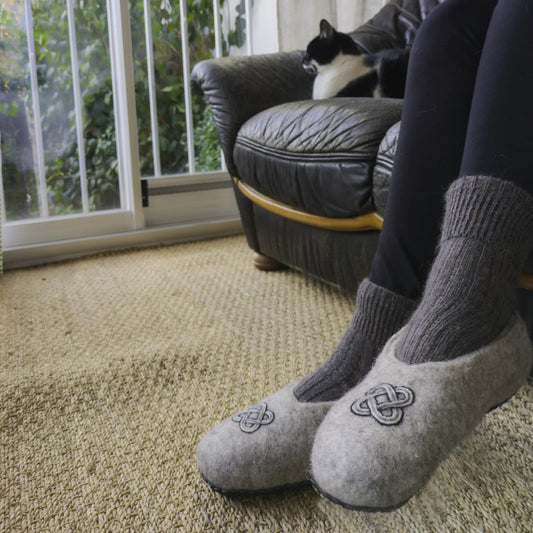
This motif, rediscovered in the palace mosaics, is now reinterpreted by the collective and appears on some of their creations. It has also become one of their symbols, linking their craft to the deep history of the region.
Benefits of natural wool and contemporary uses
The wool used by the collective has intrinsic properties: it is antibacterial, anti-allergic, thermoregulatory, and provides a sensory stimulation appreciated for blood circulation.
With its soft, velvety texture, it retains its qualities: warmth in winter, relative coolness in summer, humidity management, and stable comfort throughout the day.
Transmission and social impact
The collective passes on this expertise in local schools and workshops. Their production allows several women in the region to access creative and stable employment, while supporting a local craft industry. Through their work, they preserve a textile tradition and strengthen the cultural life of Sremska Mitrovica.
The creations
-
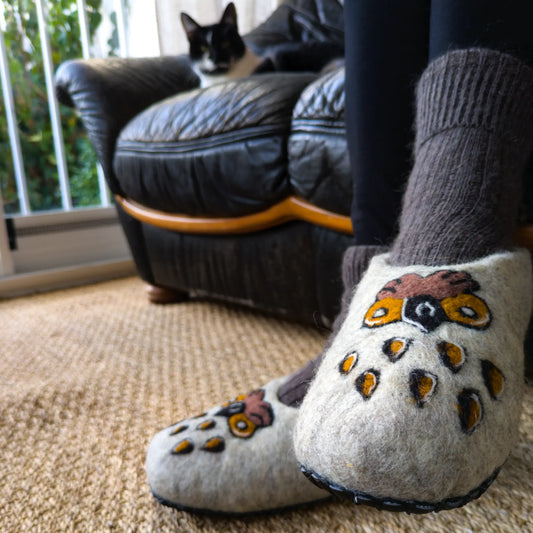
Handcrafted slippers adorned with a stylized owl
Country of origin:Zlatno runo SirmijumaRegular price From €43,20 EURRegular price€48,00 EURSale price From €43,20 EURSale -
Felt slippers adorned with an ancient symbol
Country of origin:Zlatno runo SirmijumaRegular price From €43,20 EURRegular price€48,00 EURSale price From €43,20 EURSale -
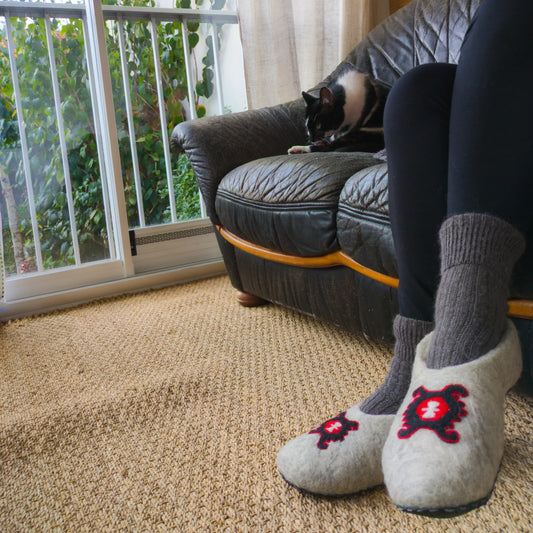
handcrafted slippers enhanced with a highly symbolic design
Country of origin:Zlatno runo SirmijumaRegular price From €43,20 EURRegular price€48,00 EURSale price From €43,20 EURSale -
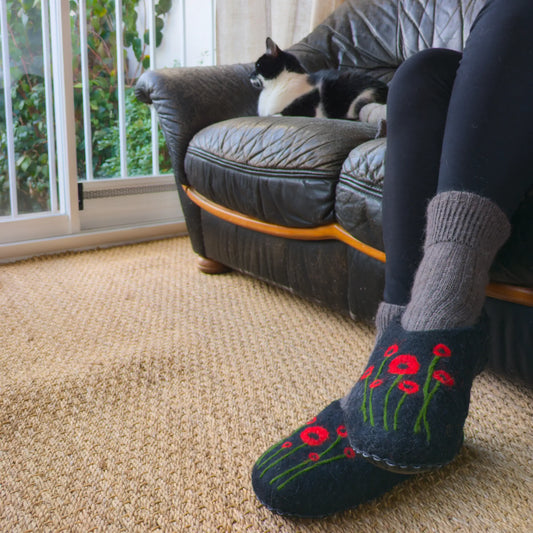
Black felt slipper with poppy pattern
Country of origin:Zlatno runo SirmijumaRegular price From €43,20 EURRegular price€48,00 EURSale price From €43,20 EURSale -
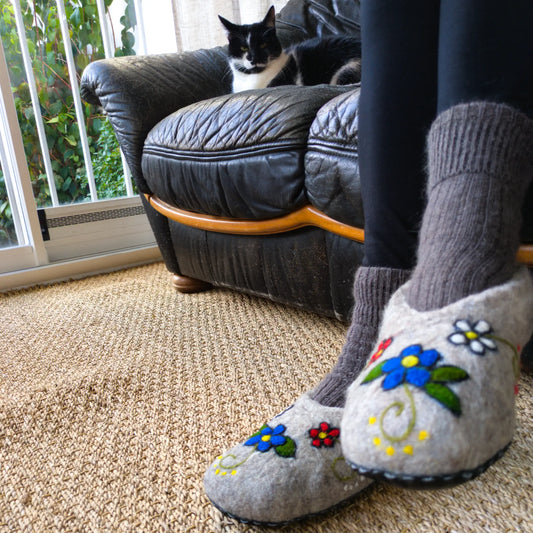
Handmade felt slippers decorated with colorful flowers
Country of origin:Zlatno runo SirmijumaRegular price From €43,20 EURRegular price€48,00 EURSale price From €43,20 EURSale -
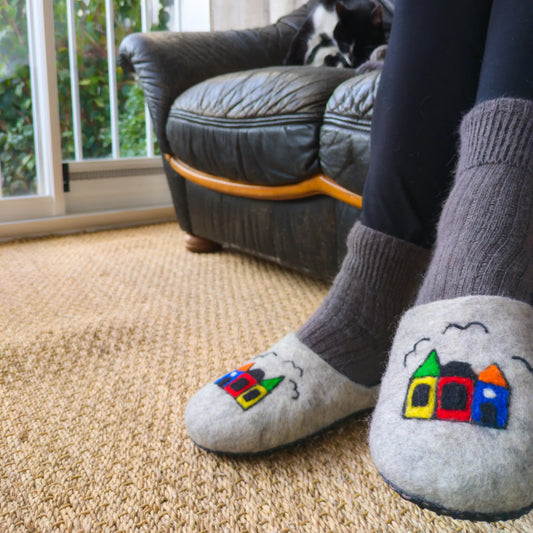
Felted wool slippers with colorful houses
Country of origin:Zlatno runo SirmijumaRegular price From €43,20 EURRegular price€48,00 EURSale price From €43,20 EURSale -
Slippers made of felted wool, both understated and elegant.
Country of origin:Zlatno runo SirmijumaRegular price From €43,20 EURRegular price€48,00 EURSale price From €43,20 EURSale -
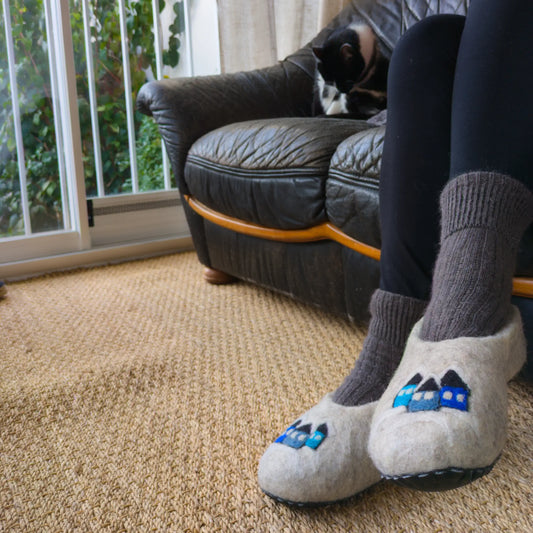
Felted wool slippers with snowy little houses
Country of origin:Zlatno runo SirmijumaRegular price From €43,20 EURRegular price€48,00 EURSale price From €43,20 EURSale -
"Stanislav" bag charm
Country of origin:Zlatno runo SirmijumaRegular price €12,00 EURRegular price -
"Mirna" bag charm
Country of origin:Zlatno runo SirmijumaRegular price €12,00 EURRegular price -
"Voivod" bag charm
Country of origin:Zlatno runo SirmijumaRegular price €12,00 EURRegular price -
"Slavka" bag charm
Country of origin:Zlatno runo SirmijumaRegular price €12,00 EURRegular price -

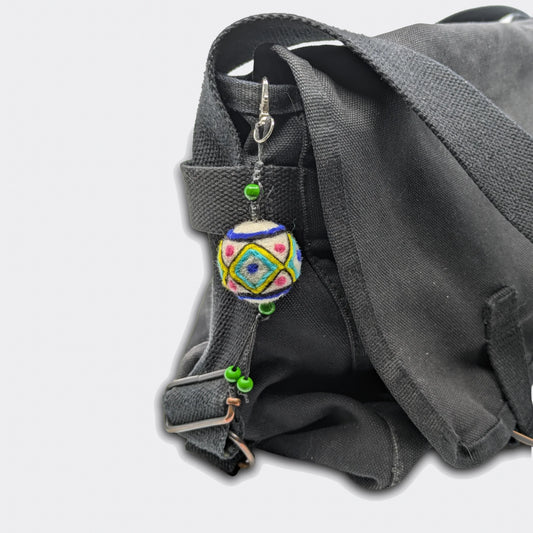 Sale
Sale"Nevena" bag charm
Country of origin:Zlatno runo SirmijumaRegular price €10,20 EURRegular price€12,00 EURSale price €10,20 EURSale -

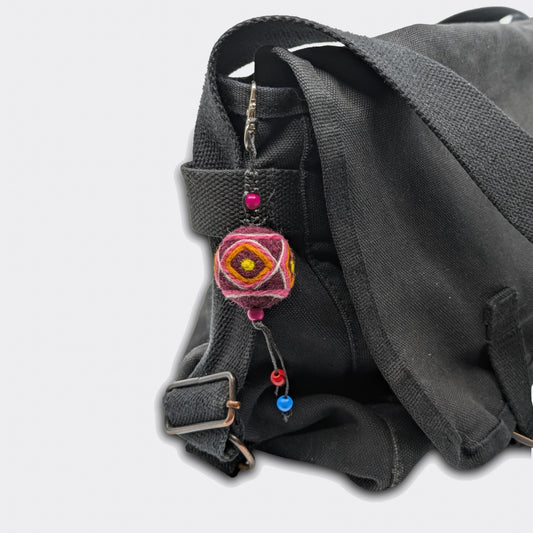 Sale
Sale"Bogdan" bag charm
Country of origin:Zlatno runo SirmijumaRegular price €10,20 EURRegular price€12,00 EURSale price €10,20 EURSale -
"Borka" bag charm
Country of origin:Zlatno runo SirmijumaRegular price €12,00 EURRegular price -
"Tania" bag charm
Country of origin:Zlatno runo SirmijumaRegular price €12,00 EURRegular price -
"Solomiya" bag charm
Country of origin:Zlatno runo SirmijumaRegular price €12,00 EURRegular price -

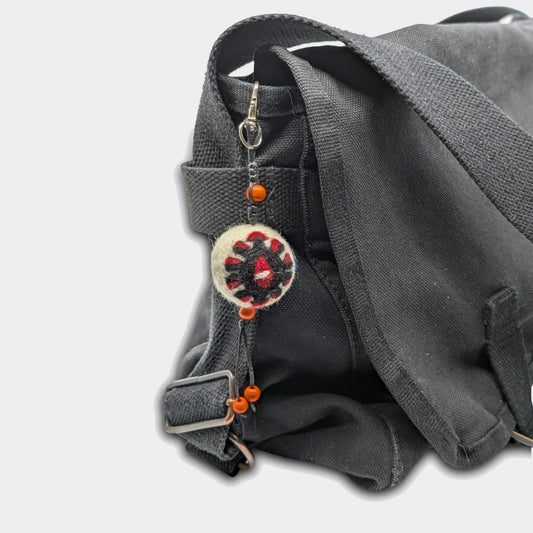 Sale
Sale"Boromir" bag charm
Country of origin:Zlatno runo SirmijumaRegular price €10,20 EURRegular price€12,00 EURSale price €10,20 EURSale -
"Zlata" bag charm
Country of origin:Zlatno runo SirmijumaRegular price €12,00 EURRegular price -
"Solomun" bag charm
Country of origin:Zlatno runo SirmijumaRegular price €12,00 EURRegular price -
"Vladislava" bag charm
Country of origin:Zlatno runo SirmijumaRegular price €12,00 EURRegular price -
"Milena" bag charm
Country of origin:Zlatno runo SirmijumaRegular price €12,00 EURRegular price -
"Milodrag" bag charm
Country of origin:Zlatno runo SirmijumaRegular price €12,00 EURRegular price