



Additional information
- Use: Indoor use only
- Colors: Slight variations in shade may occur, particularly on gray models, whose color comes from natural wool. Black or darker shades will show less noticeable variations.
- Origin: Serbia
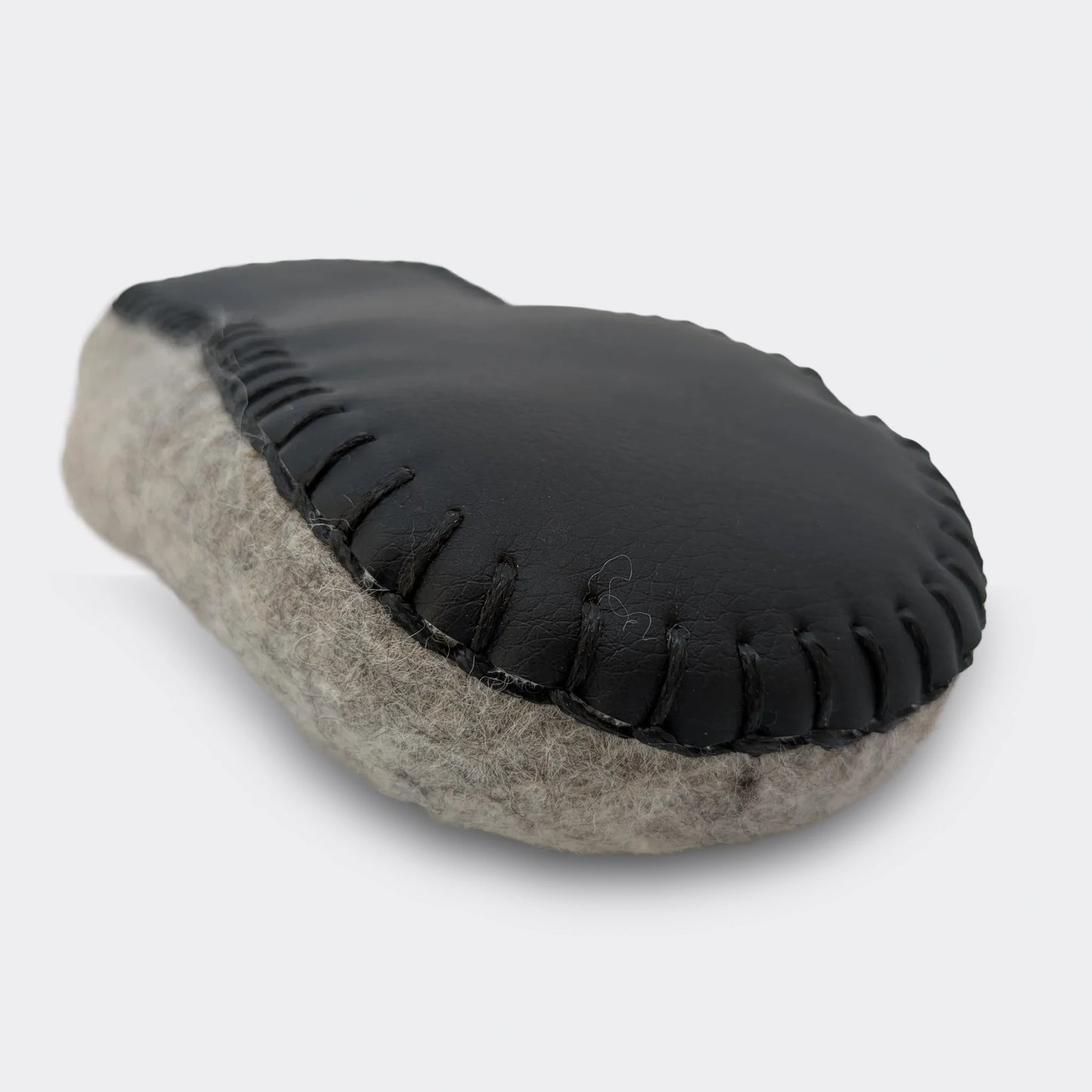
- Composition: 100% wool, faux leather sole
- Weight: 0.10-0.16kg
- Completion time: 10 hours
What are the advantages of felted wool slippers?
Felted wool is naturally thermoregulating: it keeps feet warm in winter and remains surprisingly temperate in summer.
It also has antibacterial and anti-allergic properties that limit odors, irritations and excessive perspiration.
Because it remains slightly stimulating for the skin, it contributes to better circulation without ever being rough.
Finally, felt is a breathable material: it allows moisture to escape and ensures stable comfort throughout the day.
How are felt slippers made?
It all starts with several thin layers of local wool, arranged in eight crossed layers to ensure a solid felting.
The felting is done by hand, with natural soap and hot water, in a patient movement that structures the material.
A little lavender is incorporated to discreetly perfume the wool and protect it from moths.
The sole, made of eco-leather stitched with waxed thread, provides grip and resistance without compromising comfort.
Why do we use soap and lavender?
The soap helps to open the scales of the wool so that the fibers interlock more quickly: it is what activates the felting process.
It helps the fibers to slide before they bind together.
Lavender, meanwhile, delicately perfumes the slipper, acts as a natural barrier against moths and has a mild antiseptic effect.
What is the social impact of these slippers?
Each pair directly supports:
a women's collective from Sremska Mitrovica,
local jobs,
the transmission of ancient know-how,
and the promotion of the cultural heritage of Sirmie.
Buying a pair is therefore much more than a gesture of comfort: it is a tangible contribution to a living craft.
How do you care for felted wool slippers?
They can be machine washed at 30°C or on a wool program, or simply by hand.