



Additional information
How to use a terracotta casserole dish?
Clay casseroles are designed for gentle and gradual cooking in the oven.
For proper use:
- Place the food in the casserole dish before putting it in the oven.
- Place the container in a cold oven and then start cooking.
- Allow the temperature to rise gradually
These casseroles are designed exclusively for oven use. Avoid using them under the grill.
They must not be used on a direct flame, a cooking hob or any other direct heat source.
Why cook in a terracotta casserole dish?
Cooking in clay has long been used in many culinary traditions. Terracotta diffuses heat slowly and evenly.
The cooking takes place in a closed container. The steam produced by the food condenses under the domed lid and then drips back into the dish. This natural steam circulation limits evaporation.
This cooking method has several advantages:
- Gentle and even cooking suitable for stews
- Good food moisture retention
- Gradual development of aromas
- Diffused heat limits the risk of burning food
What precautions should be taken when using it?
Like any earthenware container, the casserole dish must be protected from thermal shock.
A few simple precautions:
- It is best to place the food in the casserole dish before putting it in the oven.
- Avoid sudden temperature changes
- Avoid rinsing the hot casserole dish with plenty of cold water after cooking. Allow the container to cool before cleaning.
After cooking, it is advisable to place the casserole dish on a trivet, a wooden board or an insulating support, rather than directly on a cold surface.
If the casserole dish has been stored in a cold place, allow it to return to room temperature before use.
Like all ceramics, terracotta is also susceptible to mechanical shocks. It is recommended to handle the casserole dish with care.
How do you clean a terracotta casserole dish?
Earthenware casseroles are cleaned by hand .
After use:
- Do not put in the dishwasher
- Wash in warm water with a soft sponge
- Avoid abrasive pads or wire brushes
- Use a small amount of dishwashing liquid
- Rinse thoroughly
For stubborn stains, you can use baking soda, coarse salt or a little white vinegar.
After washing, always allow the casserole dish to air dry completely before storing it. It is advisable not to close the lid completely during storage to allow for good air circulation.
Should the casserole dish be prepared before the first use?
In the case of these enamelled casseroles, inside and out, no special preparation is necessary.
Simply wash the casserole dish in hot water before first use and then dry it thoroughly.
The soaking methods sometimes mentioned mainly concern certain unglazed pottery and are not necessary here.
How are Corund cocottes made?
These casseroles are made in Corund, Transylvania, a region renowned for its ceramic tradition.
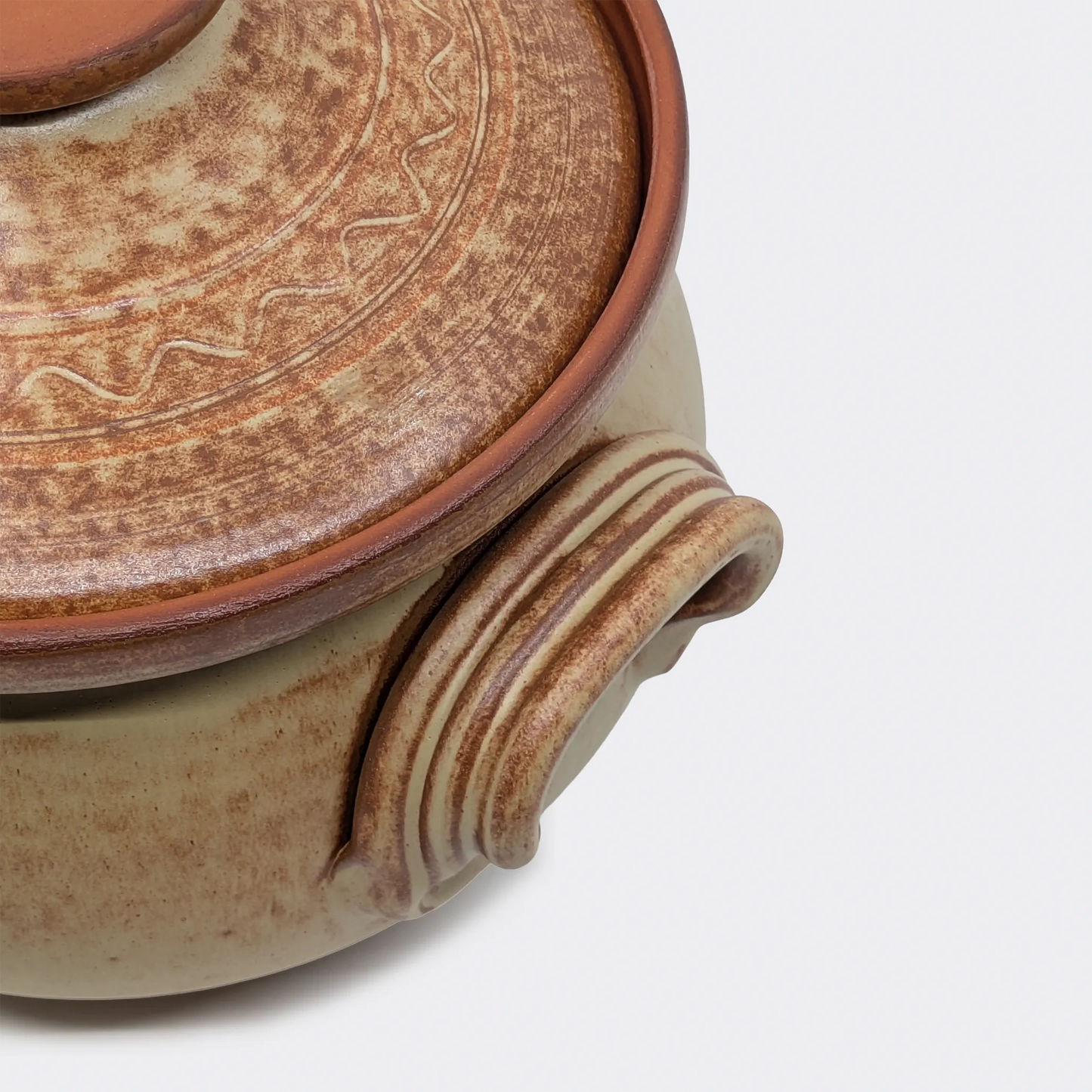
Each piece is made of clay, then fired and glazed using traditional methods. Their brown color and shape are characteristic of this family and folk craft.
As each casserole dish is handcrafted, slight variations in shape, color, or finish may occur from one piece to another. These unique characteristics are part of the charm of this traditional production.
The casserole dishes are suitable for food contact
These casseroles have been tested by an independent French laboratory for their suitability for food contact according to European directive 84/500/EEC (category 3 – cooking utensils).